
No products added!
Modern vehicles are becoming smarter and safer, and one important safety feature many car owners now prefer is the TPMS (Tyre Pressure Monitoring System). Whether you drive daily in the city or travel long distances on highways, maintaining correct tyre pressure improves safety, mileage, tyre life, and driving comfort.
Today, many car owners are confused between Inbuilt TPMS and External TPMS. Both systems help monitor tyre pressure, but they work differently and come with their own advantages and limitations.
In this blog, let’s clearly understand the difference between Inbuilt TPMS vs External TPMS, their benefits, disadvantages, pricing, and which one is suitable for your vehicle.
What is TPMS?
A Tyre Pressure Monitoring System (TPMS) is a smart electronic system that monitors the air pressure inside your vehicle tyres and alerts you when tyre pressure becomes too low or too high.
Why TPMS is Important?
- Improves road safety
- Prevents tyre bursts
- Increases tyre lifespan
- Enhances fuel efficiency
- Improves vehicle handling
- Reduces uneven tyre wear
Many premium cars now come with factory-fitted TPMS, while aftermarket TPMS kits are also available for regular vehicles.
What is Inbuilt TPMS?
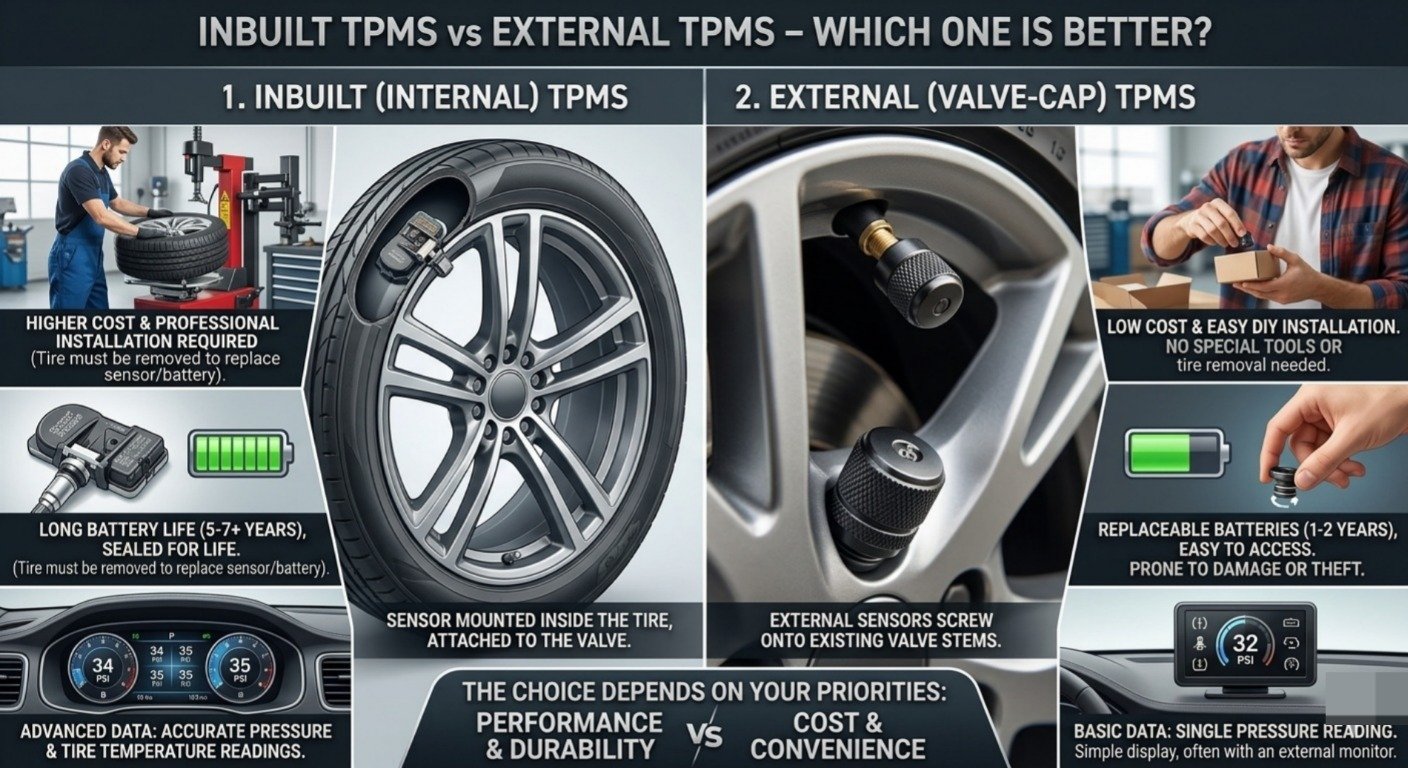
An Inbuilt TPMS (also called Internal TPMS) is installed inside the tyre, usually attached to the wheel valve or rim from within. These sensors continuously measure tyre pressure and temperature and send real-time data to the car display or mobile app.
How Inbuilt TPMS Works
The sensor is mounted inside each tyre and communicates wirelessly with the vehicle system.
Features of Inbuilt TPMS
- Real-time pressure monitoring
- Accurate readings
- Temperature monitoring
- Hidden inside tyre
- Better protection from theft or damage
- Long-lasting sensors
Advantages of Inbuilt TPMS
1. Highly Accurate Readings
Internal sensors provide more precise tyre pressure data because they directly measure pressure from inside the tyre.
2. Better Durability
Since the sensor stays inside the tyre, it is protected from rain, dust, heat, and physical damage.
3. Theft Resistant
Unlike external sensors, inbuilt TPMS sensors cannot be easily removed or stolen.
4. Professional OEM-Like Setup
Most premium vehicles use internal TPMS for a clean and factory-fitted appearance.
Disadvantages of Inbuilt TPMS
1. Higher Installation Cost
Installing internal TPMS requires tyre removal and professional fitting.
2. Battery Replacement is Difficult
When the sensor battery dies, the entire sensor may need replacement.
3. Maintenance Cost
Tyre replacement or repair may require recalibration.
What is External TPMS?
An External TPMS uses sensors attached outside the tyre valve stem. These sensors monitor tyre pressure externally and send alerts to a display unit or smartphone app.
External TPMS is popular in aftermarket car accessories because of its affordability and easy installation.
Features of External TPMS
- Easy DIY installation
- Budget-friendly
- Wireless monitoring
- App connectivity
- Portable between vehicles
Advantages of External TPMS
1. Easy Installation
You can install external TPMS within minutes without removing tyres.
2. Affordable Pricing
External TPMS systems are generally cheaper compared to internal systems.
3. Easy Battery Replacement
Most external sensors use replaceable batteries.
4. Suitable for Multiple Vehicles
You can easily transfer the kit between cars.
Disadvantages of External TPMS
1. Slightly Less Accurate
External sensors may show minor pressure variation compared to internal TPMS.
2. Theft Risk
Because sensors are visible outside the valve, there is a chance of theft.
3. Exposure to Weather
External sensors are exposed to rain, mud, dust, and heat.
4. Bulky Appearance
Some users may not like the visible sensor caps on tyres.
Inbuilt TPMS vs External TPMS – Key Differences
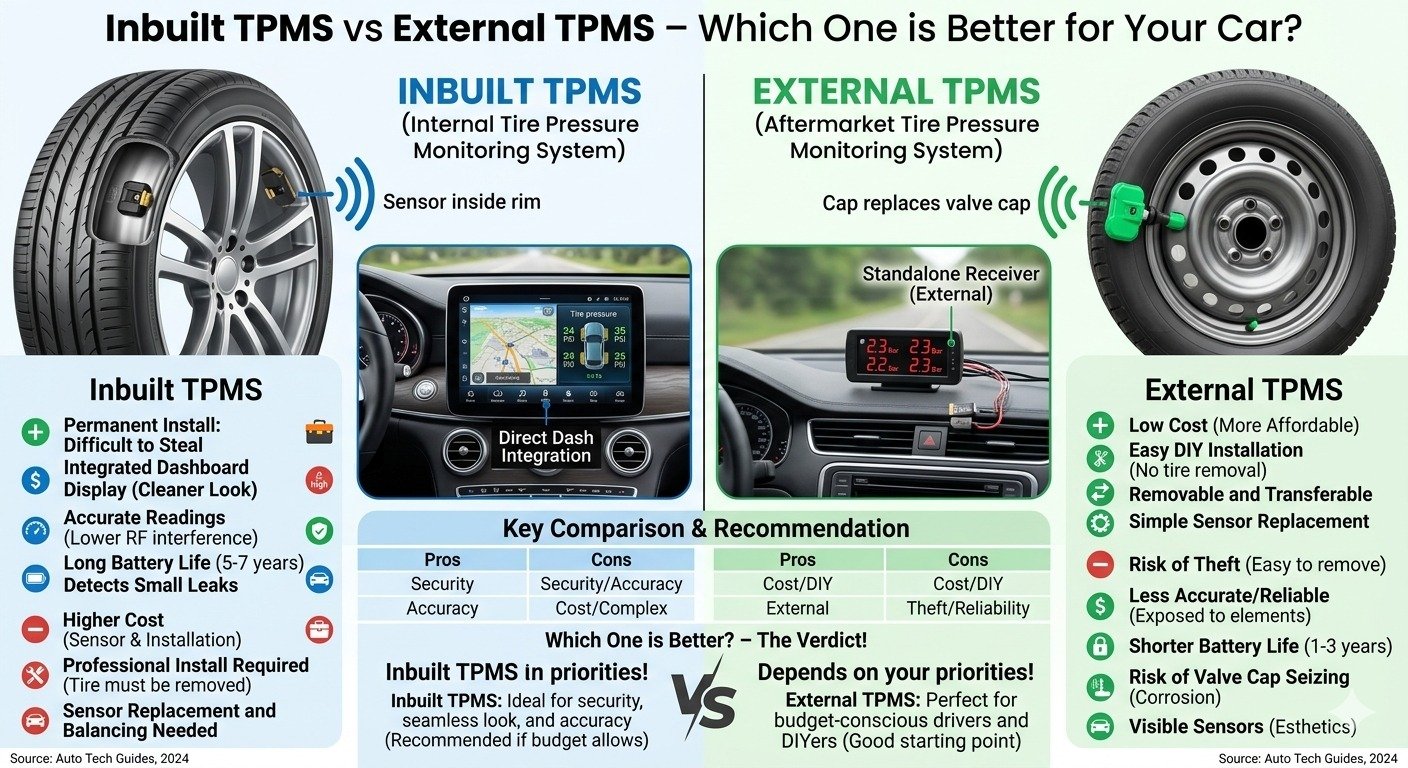
| Feature | Inbuilt TPMS | External TPMS |
| Installation | Professional fitting required | Easy DIY installation |
| Accuracy | Very high | Moderate to high |
| Cost | Expensive | Budget-friendly |
| Sensor Position | Inside tyre | Outside valve stem |
| Theft Risk | Very low | Moderate |
| Battery Replacement | Difficult | Easy |
| Durability | High | Medium |
| Appearance | Clean OEM look | Visible sensors |
| Maintenance | Higher | Lower |
Which TPMS is Better?
The answer depends on your needs and budget.
Choose Inbuilt TPMS If:
- You want OEM-level performance
- You drive long distances frequently
- You own a premium vehicle
- You need maximum accuracy
- You prefer long-term durability
Choose External TPMS If:
- You need a budget-friendly option
- You want easy installation
- You frequently switch vehicles
- You need basic tyre pressure monitoring
- You prefer low maintenance
Why Many Car Owners Prefer Manatec Mobility TPMS
When choosing between Inbuilt TPMS vs External TPMS, selecting a trusted TPMS brand is equally important for long-term performance and reliability. One such growing name in India’s automotive safety segment is Manatec Mobility, known for offering smart tyre pressure monitoring solutions for cars, bikes, commercial vehicles, and fleets.
The company provides both internal and external TPMS systems designed for Indian road conditions, helping drivers monitor tyre pressure and temperature in real time. Their TPMS solutions focus on improving driving safety, fuel efficiency, tyre life, and overall vehicle performance.
Whether you are looking for a premium inbuilt TPMS setup or an affordable external TPMS solution, Manatec Mobility offers multiple options with mobile app connectivity, wireless monitoring, and easy-to-use interfaces. Their products are widely used by individual car owners as well as commercial fleet operators across India.
For drivers who frequently travel on highways or long-distance routes, a reliable TPMS brand like Manatec Mobility can help reduce the risk of tyre damage, pressure loss, and unexpected breakdowns.
Is TPMS Worth Buying in India?
Yes. Indian road conditions, changing weather, potholes, and highway driving make TPMS extremely useful for car owners.
A good TPMS system can help prevent:
- Sudden tyre punctures
- Highway tyre bursts
- Low mileage due to improper pressure
- Uneven tyre wear
- Unsafe driving conditions
Today, TPMS is becoming one of the most recommended car safety accessories in India.
Final Verdict
Both Inbuilt TPMS and External TPMS offer excellent tyre safety benefits. If your priority is accuracy, durability, and premium performance, an internal TPMS is the better choice. If you need affordability, convenience, and simple installation, an external TPMS is a practical option.
No matter which system you choose, maintaining proper tyre pressure always improves vehicle safety, comfort, and fuel efficiency.
FAQs – Inbuilt TPMS vs External TPMS
1. Which TPMS is more accurate?
Inbuilt TPMS is generally more accurate because sensors are located inside the tyre.
2. Is external TPMS reliable?
Yes, good-quality external TPMS systems provide reliable tyre pressure monitoring for daily driving.
3. Can TPMS improve fuel efficiency?
Yes. Proper tyre pressure helps reduce rolling resistance and improves mileage.
