
No products added!
by Dilip
No Comments
How Does a Tyre Pressure Monitoring System(TPMS) Work?
Tyre safety is often underestimated when it comes to vehicle upkeep – this is where Tyre Pressure Monitoring System (TPMS) steps in. TPMS serves as a warning system and is a light indicator on the dashboard, notifying the driver of the need to take corrective action.
This comprehensive guide will cover everything you need to know about TPMS, how they function, their types & advantages as well as how to find the Best TPMS for your vehicle, especially if you are an intelligent and safety orientated driver – in India.
What is TPMS?
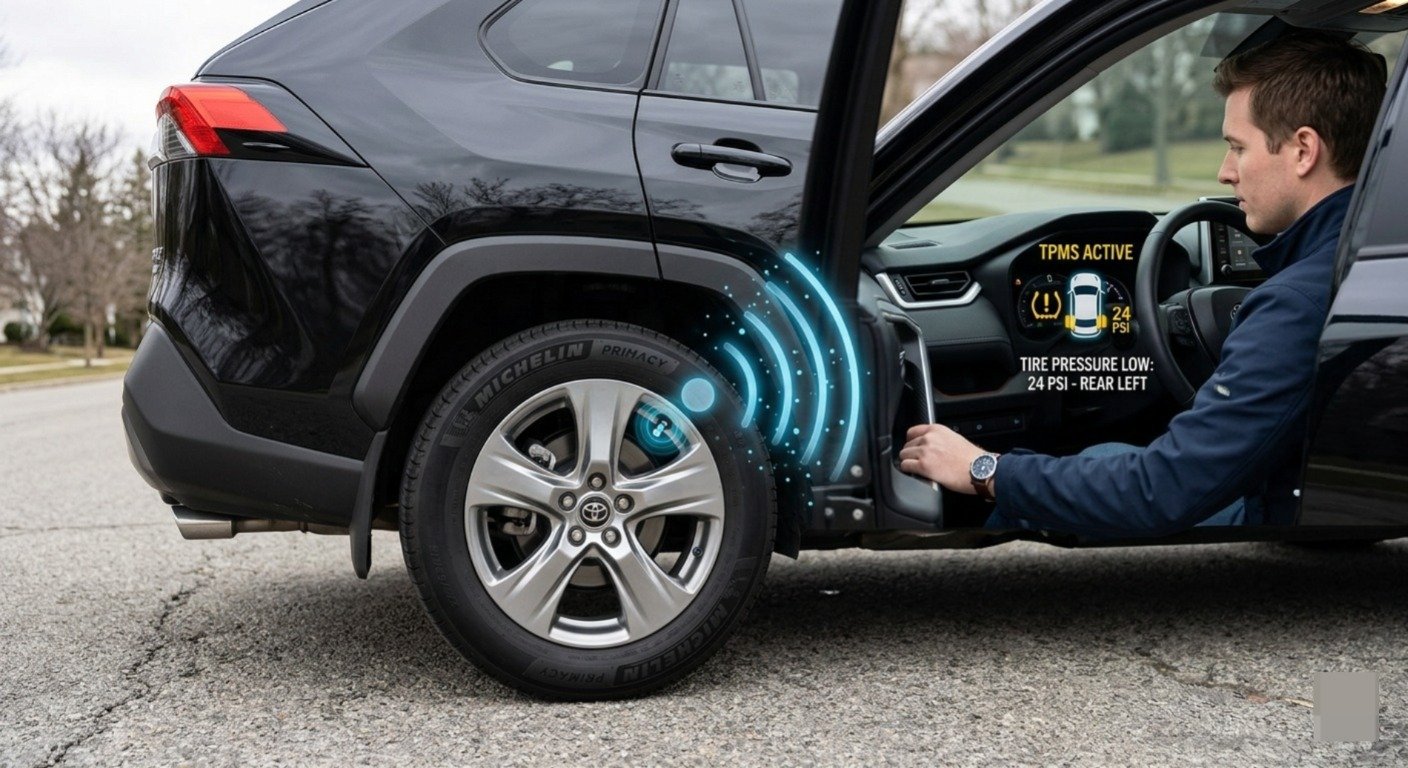
A Tyre Pressure Monitoring System (TPMS) is an electronic system that monitors the air pressure in your vehicle’s tyres. It notifies you if your tyre pressure drops below a preset level to enable you to take quick corrective action.
By maintaining proper tyre pressure you can improve:
- Road Safety
- Fuel Efficiency
- Tyre Life
- Comfortable Driving
How Does TPMS Work?
In simple terms there are two ways that TPMS works:
Direct TPMS
The Direct TPMS System contains sensors that are built into each tyre to measure pressure.
How It Works:
- Each tyre has a pressure sensor that is mounted to the valve stem.
- The sensor continuously measures the pressure and temperature of the tyre.
- The data is sent wirelessly to your vehicle’s onboard computer.
- If the tyre pressure drops below the safe operating level, the vehicle’s computer will turn on the warning light.
Key Benefits:
- Real-time and accurate readings
- Displays individual tyre pressure
- Detects slow leaks instantly
Wheel Position Sensor Based TPMS (Indirect TPMS)
Indirect TPMS uses the ABS (anti-lock brake system) of the vehicle to perform this function.
How Does Indirect TPMS Work?
1) It monitors wheel rotation.
2) A tyre with low pressure will rotate at a higher speed because of its smaller diameter than a tyre with full pressure.
3) The system detects this difference and alerts the driver.
Benefits of Indirect TPMS:
1) No Additional Sensors are Required
2) Cost Effective
3) Low Maintenance
TPMS Warning Light Meaning
The TPMS light will illuminate when:
- The tyre pressure is low.
- The sensors will not function correctly, causing a potential error in the warning.
- Systems with advanced technology will show the exact level of air in each tyre.
If the TPMS light is ignored:
- The handling of the vehicle may be impaired.
- Tyres may experience excessive wear.
- It may increase the likelihood of a tyre blowing out.
TPMS Benefits When Driving Daily

A working TPMS system provides the following benefits:
- Increased safety by reducing accidents that occur due to underinflated tyres.
- Improved fuel efficiency by decreasing the amount of fuel consumed.
- Increased tyre life by maintaining proper wear.
- Increased handling of the vehicle by providing better grip when stopping and turning.
Best TPMS in India, What to Look for
When looking for the best TPMS in India, you should consider the type and use of your vehicle, as well as the following features:
- Ability to monitor pressure instantly.
- Temperature monitoring.
- Wireless display and alert system.
- Solar or USB rechargeable.
- Easy to install.
- Accurate alerts.
Best Uses for TPMS in India
The best applications for TPMS are for:
- Commute.
- Long-distance travel.
- Fleet operations.
- SUVs and commercial vehicles.
Why Choose Manatec Mobility for TPMS?
When it comes to reliable and advanced vehicle safety solutions, Manatec Mobility stands out as a trusted name in India.
What Makes Manatec Mobility Different?
- High-quality TPMS solutions designed for Indian roads
- Accurate and real-time monitoring systems
- Easy installation and user-friendly interface
- Durable sensors built for long-term use
- Strong customer support and service network
Whether you are upgrading your car or managing a fleet, Manatec Mobility offers some of the Best TPMS in India tailored for your needs.
Tips to Maintain Your TPMS
To ensure your TPMS works efficiently:
- Check tyre pressure regularly
- Replace sensor batteries when needed
- Recalibrate after tyre rotation or replacement
- Don’t ignore warning lights
Buy TPMS,CTIS, Fleets Online at : https://manatecmobility.com/shop-tpms-online-in-india/
Conclusion
Understanding TPMS Work helps you make smarter decisions about your vehicle’s safety. Whether it’s a direct or indirect system, TPMS plays a crucial role in preventing accidents and improving performance.
Investing in the Best TPMS in India, like solutions from Manatec Mobility, ensures peace of mind every time you hit the road.
FAQ
What is TPMS in a car?
TPMS is a system that monitors tyre pressure and alerts drivers when it drops below safe levels.
How does TPMS work?
TPMS works using sensors (direct) or wheel speed data (indirect) to detect pressure changes.
Which is better: direct or indirect TPMS?
Direct TPMS is more accurate, while indirect TPMS is more cost-effective.
Is TPMS mandatory in India?
It is not mandatory for all vehicles yet, but many modern cars come with it as a standard feature.
Can TPMS improve fuel efficiency?
Yes, maintaining proper tyre pressure improves fuel efficiency.
How long do TPMS sensors last?
Typically, 5–10 years depending on usage and battery life.
Why is my TPMS light still on after filling air?
It may need recalibration or there could be a sensor issue.
Can I install TPMS in any car?
Yes, aftermarket TPMS systems can be installed in most vehicles.
What is the cost of TPMS in India?
Prices vary based on features but generally range from ₹2,000 to ₹10,000+.
Which is the Best TPMS in India?
Reliable brands like Manatec Mobility offer some of the best TPMS solutions with advanced features.
